Money is one of the most discussed subjects in the Bible, and yet many believers have never been taught what it actually says. The result is often guilt, anxiety, and the quiet pressure of debt. The good news is that Scripture's approach to money is not a set of restrictions. It is a path to freedom and peace, and it is surprisingly practical.
1. Stewardship: it was never only yours
The foundation of biblical finance is stewardship. Everything you have is understood as a trust to manage well, not a possession to clutch or a burden to carry alone. That single shift, from owner to steward, takes the fear out of money. Your job is not to control everything. It is to be faithful with what is in front of you.
2. Contentment over comparison
Scripture repeatedly warns that the love of money, not money itself, is the trap. Most overspending is driven by comparison, by chasing a life that belongs to someone else. Contentment is the quiet superpower of biblical finance. It is what lets you keep what you earn and stop the leak before it starts.
3. Honest, diligent work
The Bible honors work and warns against both laziness and dishonest gain. Provision comes through diligence done with integrity. This is not a prosperity formula. It is the simple, dignified principle that faithful work is part of how God provides.
4. Escape the bondage of debt
The Bible does not call debt a sin, but it is blunt about its danger, describing the borrower as servant to the lender. Debt quietly hands your future choices to someone else. The wise path Scripture points to is to get free of it and to avoid presuming on tomorrow, so your decisions stay your own.
5. Save with wisdom
Proverbs praises the ant that stores in summer and the wise who set something aside. Saving is not a lack of faith. It is prudence. A buffer between you and the next emergency is part of stewarding well, and it is what keeps a surprise from becoming a crisis.
6. Give generously
Finally, Scripture ties freedom to open hands. Generosity is presented not as a loss but as a release, the antidote to money's grip on the heart. Wise saving and generous giving are not opposites. Practiced together, they are what financial freedom in the Bible actually looks like.
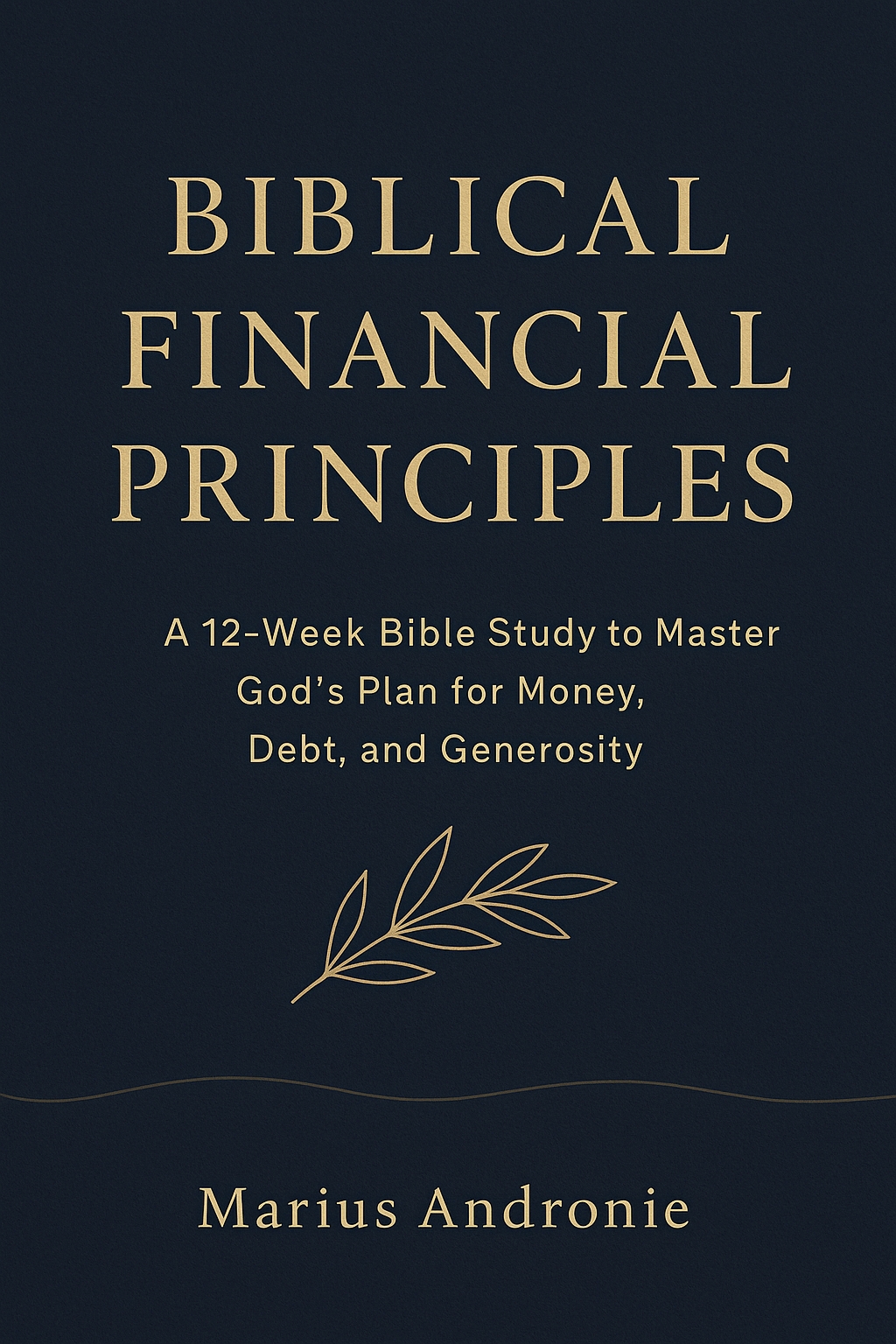
The 12-week study
Biblical Financial Principles
A 12-week Bible study that turns these six principles into practical, weekly steps, built on grace rather than guilt. Ideal for personal or small-group study.
See the bookFrequently asked questions
What does the Bible say about financial freedom?
It treats money as something to steward, not serve. Freedom comes from contentment, honest work, escaping debt, saving, and giving, less about being rich, more about being free and useful with what you have.
Does the Bible say debt is a sin?
No, but it warns plainly about its danger, calling the borrower servant to the lender. The wise path is to get free of debt and avoid presuming on the future.
Is there a Bible study that teaches this?
Yes. Biblical Financial Principles is a 12-week study that walks through each theme with real passages and practical steps, built on grace.
Prefer a practical, non-faith plan? See the Financial Freedom Roadmap, or read more on the blog.