"Just be grateful" can sound like empty advice, especially on a hard day. But gratitude journaling is not about forcing positivity or pretending things are fine. It is a small, practical exercise with a surprising amount of science behind it, and it works for a very human reason.
Why our brains need it
We are wired to notice threats and problems. That negativity bias kept our ancestors alive, but in modern life it keeps many of us anxious, drained, and quick to overlook what is going well. Gratitude journaling is a deliberate counterweight. By regularly directing your attention to the good, you slowly train your mind to notice it more naturally, the rest of the time too.
What the science actually says
Studies in positive psychology have linked a consistent gratitude practice to measurable benefits: improved mood, lower stress, better sleep for some people, and a greater sense of overall wellbeing. Importantly, the effect comes from doing it regularly, not from a single grand gesture. It is a habit, and like any habit, the benefit builds with repetition.
A fair note: gratitude journaling is not a cure-all. It will not fix a genuinely difficult situation, and it is not a substitute for professional help when you need it. What it reliably does is shift the everyday baseline of how you feel, which is no small thing.
How to start (and actually keep it up)
The biggest mistake is making it too big. Keep it tiny so the habit survives a busy day:
- Be specific. "My friend called to check on me" beats "my friends." Specific moments carry more feeling than general categories.
- Add a why. One short line on why something mattered deepens the effect more than a longer list.
- Pick a fixed time. Attach it to something you already do, your morning coffee or bedtime, so it becomes automatic.
- Aim for consistency, not perfection. A missed day is fine. Three lines most days beats a perfect entry you abandon in a week.
Why a guided journal helps
Left to a blank page, most people run out of ideas and quietly stop. A guided journal solves that by giving you a fresh, specific prompt each day, so you never face the blank page and the habit actually sticks. That is the difference between trying gratitude once and getting the real, compounding benefit of it.
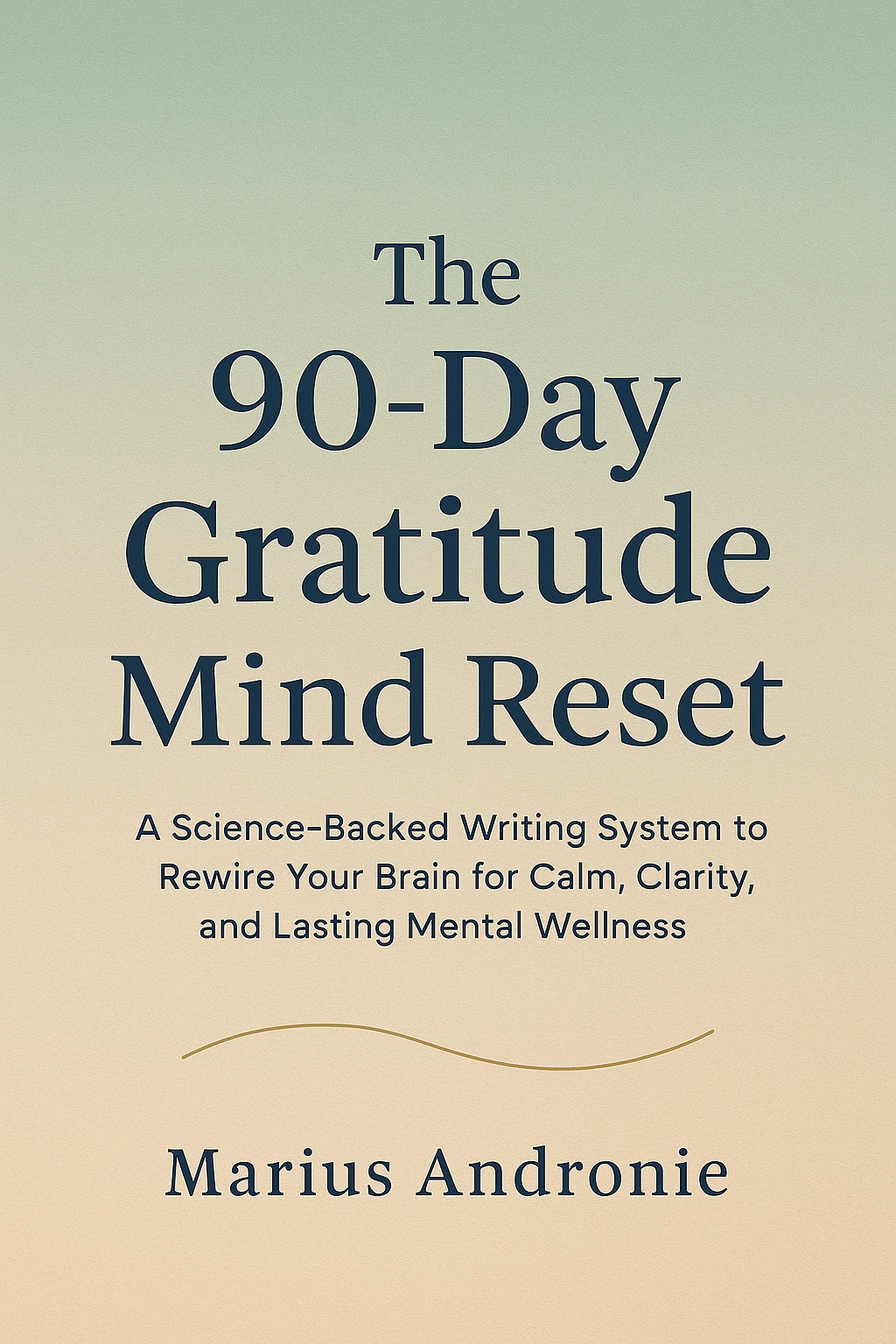
The guided journal
The 90-Day Gratitude Mind Reset
A science-backed journal with one fresh prompt a day for 90 days, five minutes each, so the habit sticks and the shift in how you feel becomes real.
See the journalFrequently asked questions
Does a gratitude journal actually work?
Yes. Research links a regular gratitude practice to better mood, lower stress, and improved wellbeing. It is a habit that works through consistency, not one big effort.
How do I start one?
Keep it tiny: once a day, write two or three specific things you are grateful for and one line on why. Attach it to a fixed time so it becomes automatic.
Is it a replacement for therapy?
No. It is a helpful everyday tool, but it does not replace professional care when you need it.
For calmer days in later life, see CBT exercises for seniors, or read more on the blog.