Self-sufficiency has a branding problem. Say the word and people picture bunkers, doomsday, and a shed full of gadgets. The reality is quieter and far more useful: it is the confidence of understanding the systems your life depends on well enough to keep them running yourself when the easy options are gone. I spent a career as an Army engineer doing exactly that, keeping essential systems alive under pressure, and the same calm, ordered thinking works just as well at home.
Self-sufficiency is a mindset, not a bunker
Real resilience starts in your head, not your garage. It is the shift from assuming someone else will always handle the water, the power, and the food, to knowing how those things actually reach you and what you would do if they paused for a few days. That shift removes a surprising amount of background anxiety, because a vague fear becomes a concrete, solvable list.
The four priorities, in order
The single biggest mistake beginners make is buying interesting gear while missing the basics. Work in this order and you cannot go far wrong:
- Water first. You can survive only days without it. Store a simple supply and have a way to filter and purify more. This is the cheapest, highest-value step, and almost everyone skips it.
- Power next. Plan backup energy around what actually has to stay on, the fridge, a phone, some light, not your whole house. Even a modest battery and a way to recharge changes a bad week completely.
- Food third. A rolling buffer you genuinely eat and replace, scaled from two weeks toward longer, beats a pile of forgotten cans you never touch.
- Security and the human side last. Calm, proportionate plans, and the steady mindset that keeps a household functioning under stress.
How much water is enough for your household? The emergency water calculator works it out in seconds, from the one gallon per person per day rule.
You do not need to live off-grid
Here is the part that surprises people. Most of the benefit of self-sufficiency has nothing to do with leaving the grid. An apartment dweller with stored water, a backup battery, a food buffer, and a clear plan is more genuinely prepared than someone with acres of land and no system. Going fully off-grid is a lifestyle choice. Resilience where you already live is available to everyone, today.
Start small, this week
Do not try to do everything at once. Pick the first priority, water, and take one concrete step in the next seven days. Then the next. Self-sufficiency is built like fitness, through small repeated reps, not one heroic effort that burns you out by the weekend.
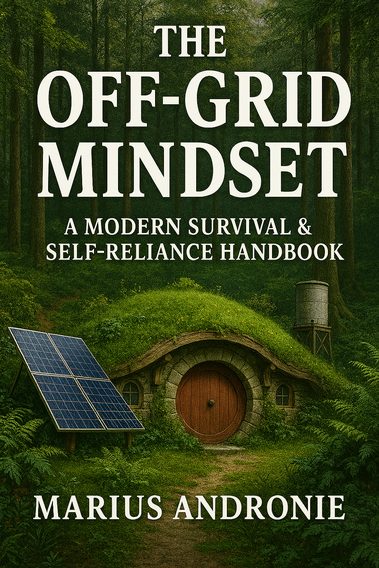
The complete handbook
The Off-Grid Mindset
The complete, extended 183-page guide to resilient self-reliance: solar power, clean water, safe food, and home security, step by step, from a retired Army engineer.
See the bookFrequently asked questions
How do I start becoming more self-sufficient?
Build a buffer in the four things your life depends on, in order: water, power, food, security. Pick one, take a small step this week, then the next. It compounds.
Do I need land or to live off-grid?
No. Most of the value is resilience in an ordinary home: stored water, backup power, a food buffer, and a calm plan. Off-grid is a choice, not a requirement.
What comes first?
Water, then power, then food, then security. Water is the priority because you can go only days without it, so store some and have a way to filter more.
Want the focused starter version? See off-grid survival for beginners, or read more on the blog.