No one quite prepares you for how loud the quiet becomes. The leash still hanging by the door. The spot at your feet that stays empty. The walk you still reach for at the same time each day. If you are reading this with a lump in your throat, please hear the first and most important thing: your grief is real, and you are not alone.
Yes, it is normal to grieve this deeply
People sometimes say "it was just a dog," and that can make the pain feel like something to hide. It is not. A dog is woven into the texture of your everyday life, the morning greeting, the loyal shadow at your side, the unconditional welcome home. When that is gone, the loss is genuine grief. Surprise at how heavy it feels is common, and it is not a sign that something is wrong with you.
Gentle ways to cope in the early days
- Let the feelings come. Crying, numbness, anger, relief after a long illness, all of it is normal. You do not have to feel a certain way on a certain day.
- Keep small routines. When the big things feel impossible, simple anchors, a meal, a short walk, getting outside, help carry you through the hardest stretch.
- Let people in. Tell someone who understands. Pet loss is real loss, and you deserve support, not a brave face.
- Give the grief somewhere to go. Held silently, grief circles the same painful thoughts. Writing about your dog, even a sentence, lets it move instead of building up.
Remembering, not forgetting
Healing does not mean leaving your dog behind. It means slowly moving from only-pain toward love and gratitude that can sit alongside the loss. Capturing the memories, the daft habits, the favorite walks, the way they looked at you, protects the good ones so they are not buried under the painful final images. Many people find a small ritual helps: a photo somewhere gentle, a keepsake collar, a few written memories.
Healing at your own pace
There is no timeline you are failing. Grief softens as you process it, not as you push it down, and it tends to come in waves rather than a straight line. Be patient with the unexpected hard days. If your grief feels unbearable or does not ease at all over time, please reach out to your doctor or a grief counselor. There is no shame in needing more support.
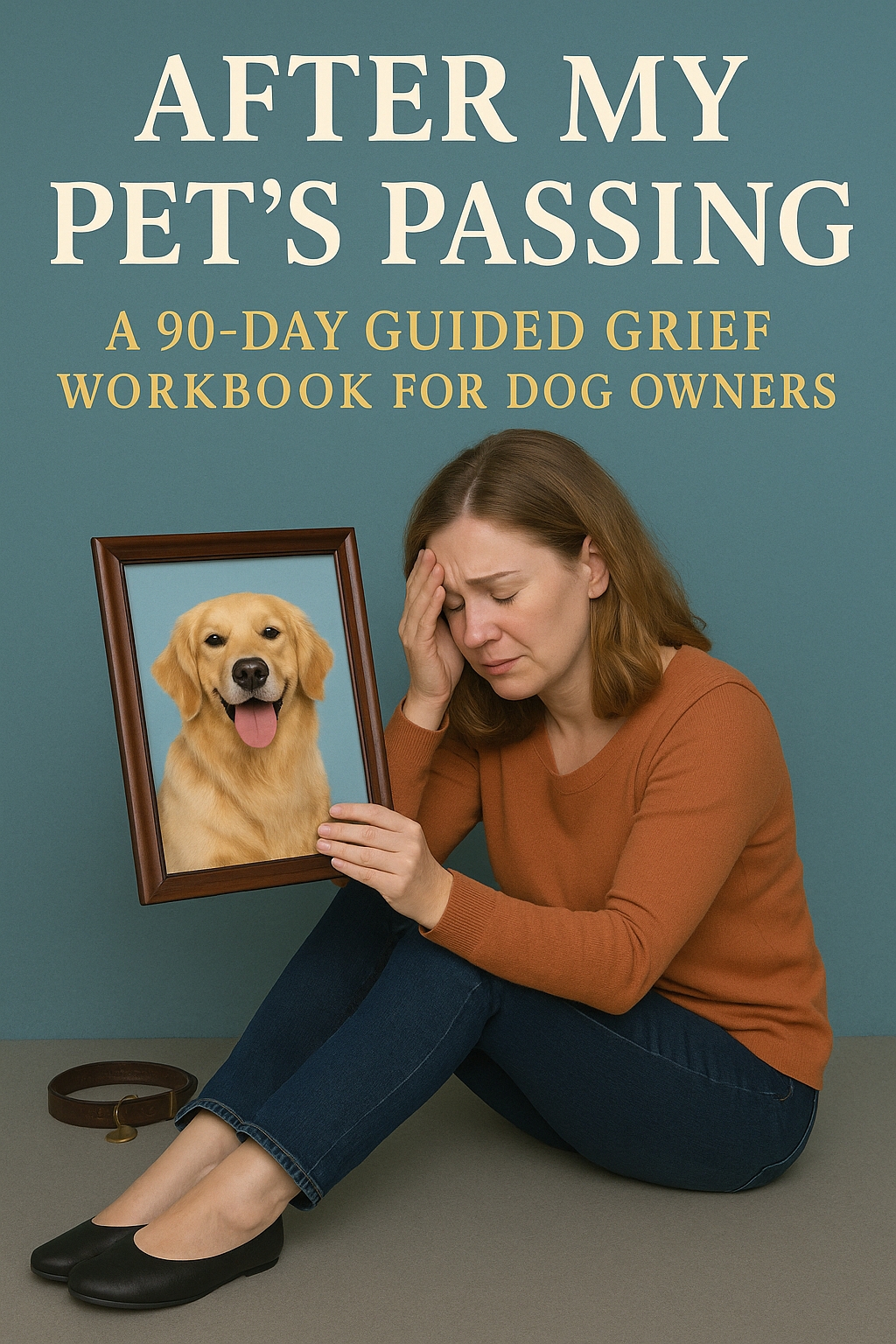
A gentle companion
After My Pet's Passing: For Dog Owners
A 90-day guided grief workbook with one gentle, science-backed prompt a day, to help you honor your dog and heal at your own pace. You are not overreacting. You are not alone.
See the workbookFrequently asked questions
Is it normal to grieve a dog this deeply?
Yes. The bond is real and woven into daily life, so the loss is real grief, not an overreaction. Your grief is valid and deserves support.
How long does grief after losing a dog last?
There is no fixed schedule, and the goal is never to forget. The sharpest pain usually eases over weeks and months, gradually making room for good memories alongside the loss.
Does writing about my dog really help?
Yes. Grief held silently tends to circle. Putting it into words gives it somewhere to go and is one of the gentlest, best-supported ways to process loss.
Grieving a cat instead? There is a companion edition for cat owners. More on the blog.