Free preparedness tool
How much emergency water should you store?
The short answer: store at least one gallon of water per person per day, about 3.8 liters, for several days at the least: the CDC says at least three days and a two-week supply if possible. The one gallon figure is U.S. federal emergency guidance, from Ready.gov and the CDC, and it is the baseline in The Off-Grid Survival Handbook, which adds that two to three gallons per person per day is realistic once you cook and keep clean.
Plan for more in hot weather, for pregnant women, for anyone who is ill, and for pets. The two-week target matters because the handbook's stay-or-leave test asks whether you have water, food and shelter for two weeks or more.
| People | 3 days | 2 weeks |
|---|---|---|
| 1 | 3 gallons (11 l) | 14 gallons (53 l) |
| 2 | 6 gallons (23 l) | 28 gallons (106 l) |
| 4 | 12 gallons (45 l) | 56 gallons (212 l) |
| 6 | 18 gallons (68 l) | 84 gallons (318 l) |
For your own household, enter the people and how long you want to be covered. The calculator uses the same rules: one gallon per person per day as the minimum, two to three gallons once you cook and keep clean, and 2,000 calories per adult per day in the pantry, from the water and food chapters of the handbook.
How the numbers work
- Minimum: 1 gallon per person per day, for drinking and basic hygiene. The book rounds a family of four to about 30 gallons a week.
- Comfortable: 2 to 3 gallons per person per day once cooking, sanitation, and a little gardening are included.
- Food: 2,000 calories per adult per day, the rule of thumb for the 30-day emergency pantry.
- Why two weeks matters: the stay-or-leave rule in chapter 3 asks whether you have water, food, and shelter for two weeks or more. If you do, staying home is sustainable.
Treat the result as a baseline, not a ceiling. The book is clear that families need more, especially with children, pets, or medical needs. This page is for general preparedness information only and is not medical advice.
Where to keep it
- 1 to 2 weeks: bottled water or food-grade containers. Rotate every 6 to 12 months.
- 2 to 6 months: 55-gallon barrels or water bricks, in a cool, dark place.
- 6 months or more: rainwater catchment, underground cisterns or large tanks, or a well with a hand pump or solar pump.
Storing water is only half of it. The handbook also covers the difference between filtering and purifying water, and why you filter first and then purify.
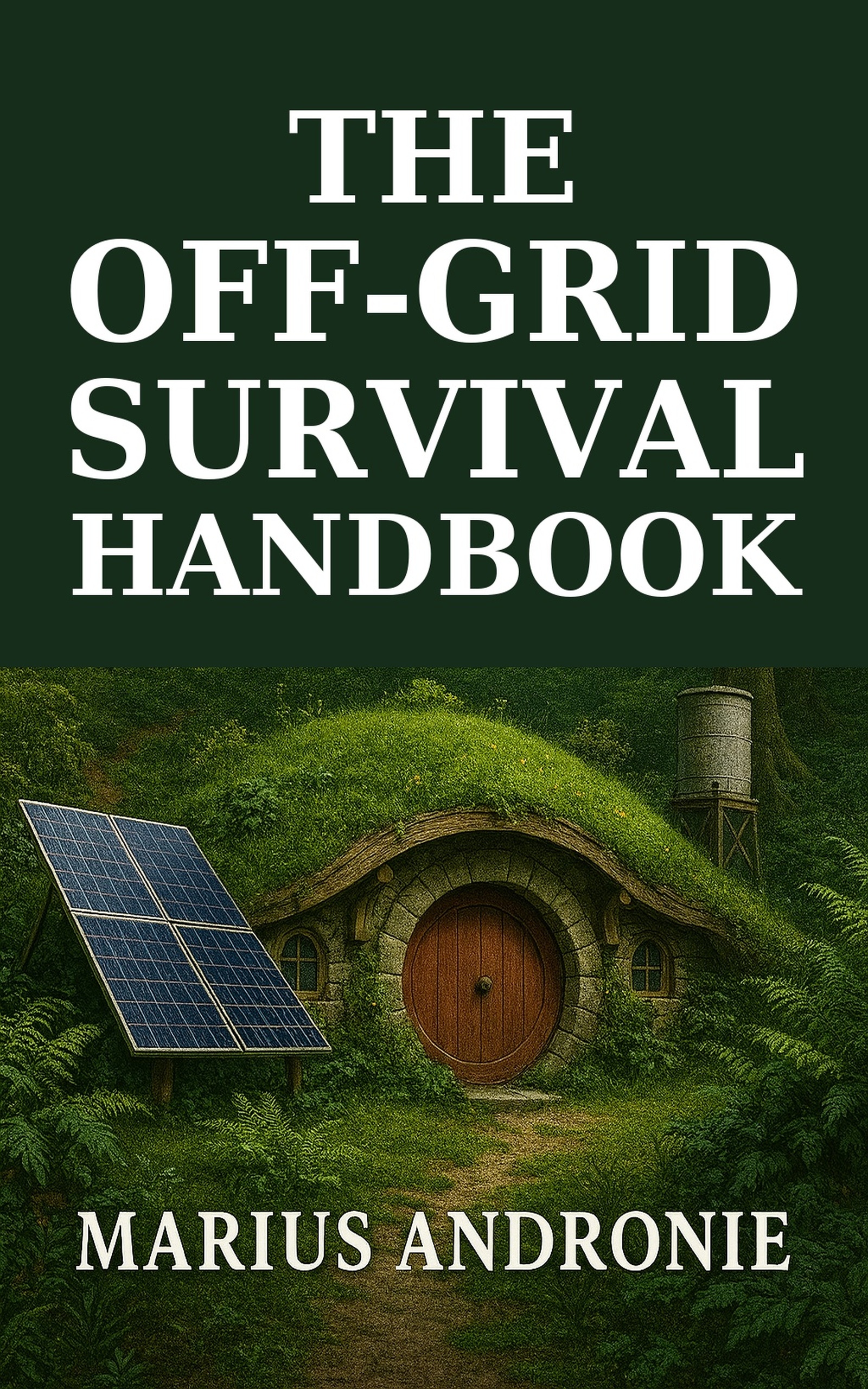
The full plan
The Off-Grid Survival Handbook
Water is week one. The book's 30-day starter plan goes on to food, energy and home backup, then family and community, with Quick Wins and a checkpoint at the end of every chapter.
See the off-grid survival bookRelated reading: Off-Grid Survival for Beginners: Where to Actually Start and How to Become More Self-Sufficient.
Frequently asked questions
How much water per person per day for an emergency?
At least one gallon per person per day, about 3.8 liters, for drinking and basic hygiene. That is the figure Ready.gov and the CDC give, and The Off-Grid Survival Handbook calls it the minimum, suggesting two to three gallons per person per day once you include cooking, sanitation, and gardening.
How much water should I store for emergencies, and for how many days?
Enough for at least three days, and two weeks if you can. Ready.gov says several days; the CDC gives three days as the minimum and a two-week supply as the goal, and the handbook's stay-or-leave test uses two weeks. Multiply the people in your home by the days you want covered to get the minimum gallons.
How much water does a family of four need for two weeks?
At the one gallon minimum, 56 gallons, about 212 liters. With cooking and sanitation at two to three gallons per person per day, 112 to 168 gallons. For three days the minimum is 12 gallons.
How should I store emergency water?
For one to two weeks, bottled water or food-grade containers, rotated every 6 to 12 months. For two to six months, 55-gallon barrels or water bricks kept in a cool, dark place. For longer than six months, rainwater catchment, cisterns or large tanks, or a well with a hand or solar pump.
Does the calculator include pets or medical needs?
No. It uses the per-person baseline only. The book notes that families need more, especially with children, pets, or medical needs, so add a margin on top if that is your household.
Where do these figures come from?
The one gallon per person per day rule is the U.S. federal guidance published by Ready.gov and the CDC; the three-day minimum and the two-week goal are the CDC's figures, while Ready.gov says several days. The two to three gallon comfortable range, the 2,000 calories per adult per day and the storage advice come from the water and food chapters of The Off-Grid Survival Handbook. Liters are converted at 3.785 liters per U.S. gallon and rounded.
Free gift
Get the free 72-Hour Family Readiness Checklist
One printable page: water, power, food, light and documents for the first three days. Plus a few practical notes from the book. No spam, unsubscribe anytime.