Resilience & self-reliance
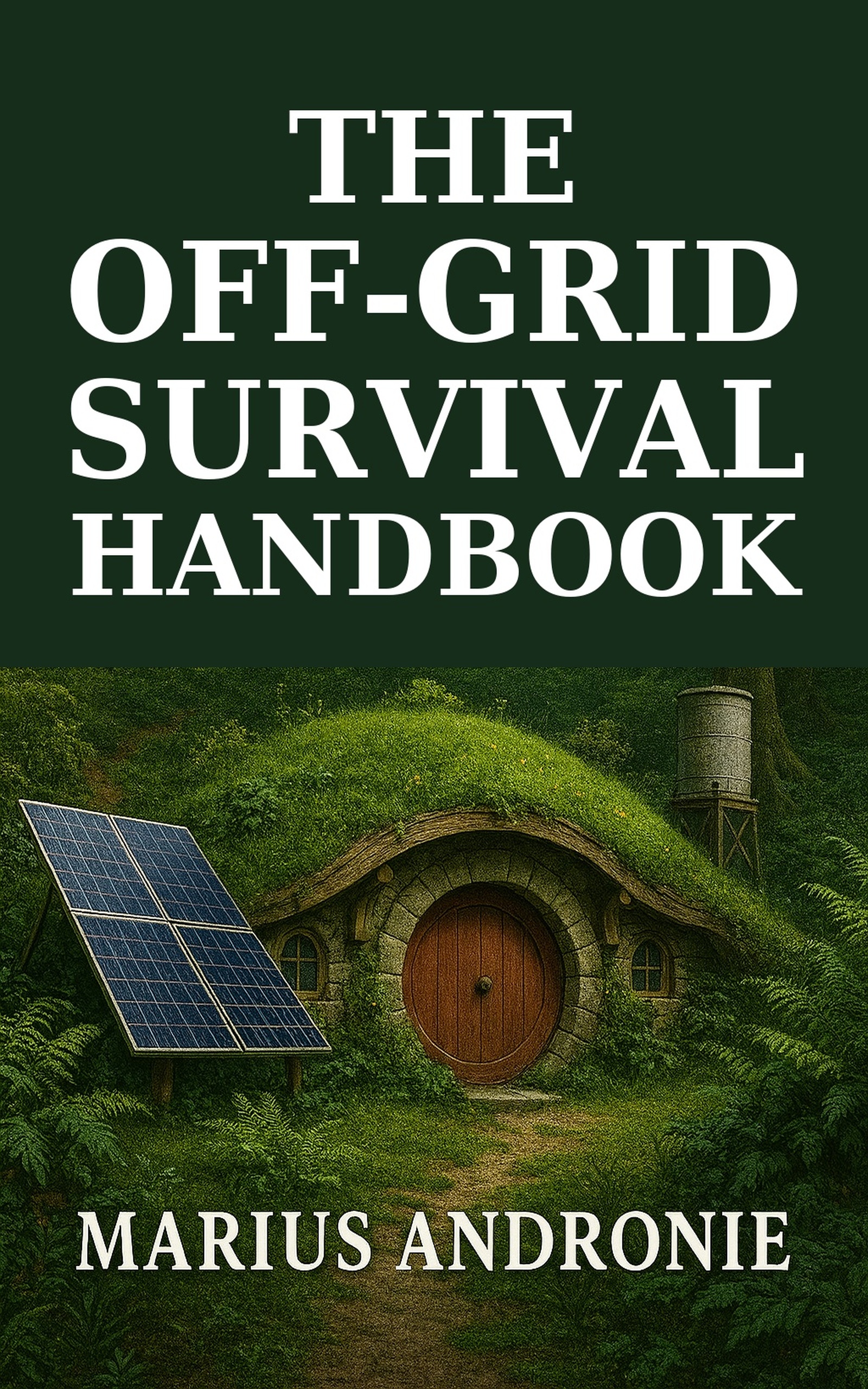
The Off-Grid Survival Handbook
Survive, thrive, and reach true freedom with self-sufficiency, energy independence, and resilient living, built for ordinary families, not survivalists.
Self-reliance for people who are not survivalists
Most preparedness books are written for people who already live on a remote homestead. This one is written for the rest of us: families in apartments and suburbs who simply want to be ready when the power goes out, costs spike, or the grid wobbles, without fear, and without upending their lives.
It comes from an unusual place. As a retired Army engineer, I spent decades keeping critical systems running under pressure: power, water, logistics, security. The skills that mattered most were never heroics. They were planning, resource management, and staying calm. This book turns those same skills into small, reliable systems any household can build, one at a time.
What's inside: 15 chapters in five parts
The handbook moves from how you think, to the systems that keep a household running, to the people you are protecting, and ends with a plan you can start this week.
Part I: The foundations of off-grid living
- Chapter 1: The Off-Grid Mindset: Your Greatest Survival Tool
- Chapter 2: Freedom vs Dependence: Why Go Off-Grid?
- Chapter 3: Bug-In or Bug-Out: Making the Right Choice
Part II: Core survival systems
- Chapter 4: Water: Securing the Most Precious Resource
- Chapter 5: Food: From Stockpiles to Sustainable Gardens
- Chapter 6: Energy Independence: Powering Your Life Off-Grid
- Chapter 7: Shelter & Comfort: Staying Safe and Warm
Part III: Protection & health
- Chapter 8: Security: Protecting Your Home and Family
- Chapter 9: Health & First Aid in Off-Grid Life
- Chapter 10: Financial Resilience: Thriving in Any Economy
Part IV: Advanced self-sufficiency
- Chapter 11: The Off-Grid Family: Kids, Elderly, and Pets
- Chapter 12: Community & Networks: No One Thrives Alone
- Chapter 13: Case Studies: Modern Off-Grid Success Stories
Part V: Action & growth
- Chapter 14: The 30-Day Off-Grid Starter Plan
- Chapter 15: Your Next Step: From Prepared to Empowered
What the chapters give you
- A decision rule for the worst night. Stay or leave comes down to three questions: is the house structurally safe, do you have two weeks or more of water, food and shelter, and is the threat outside growing closer. Separate checklists cover bugging in and bugging out, including a pre-chosen destination, a backup route, documents and small bills.
- Water you can count. How much to store per person, short, medium and long-term storage, the difference between filtering and purifying (filter first, then purify), and different strategies for city, suburb and countryside.
- Food in layers. A 30-day emergency pantry, long-term staples in mylar bags, canning, dehydrating and fermenting, a first raised bed or container garden, and what small livestock can add if you have the space.
- Power sized to your budget. Energy priorities in a crisis (light, communication, preservation, then heating or cooling), solar, wind, generators and hybrid systems, battery options, three sample setups from a portable kit to a full household system, and the conservation habits that make any system last longer.
- Security without paranoia. Three layers, deterrence, detection and defense, with the goal of stopping trouble in the first two, plus everyday habits and why a street that looks out for each other is a harder target than one isolated house.
- Health, money and family. A practical first aid kit, sanitation, the skills worth learning before you need them, an emergency fund built gradually, bartering, and planning for children, elderly relatives and pets so nobody is an afterthought.
How it's built
Every chapter ends the same way: Quick Wins, three small actions you can finish this week, and a Checkpoint Reflection, one honest question about where your household is weakest. You are never asked to do everything at once, and you always know the next small step.
The book closes with a 30-day starter plan in four weeks: water and basic supplies, then food security, then energy and home backup, then mindset and community, ending with a family drill and a neighbor you have actually spoken to. Chapter 13 adds four short case studies, from a suburban family to a neighborhood preparedness circle, to show what those steps look like in practice.
Start with water: the free emergency water calculator turns the book's storage rules into numbers for your own household.
Want to go deeper? The Off-Grid Mindset is the extended edition on Leanpub, a 183-page PDF.
Related reading: How to Become More Self-Sufficient: A Calm, Practical Starting Plan and Off-Grid Survival for Beginners: Where to Actually Start.
Frequently asked questions
Do I have to move off-grid to use this book?
No. The handbook is built for ordinary urban and suburban families. You start where you are, an apartment or a house with a backyard, and add small, reliable systems one at a time. There is no need to move to the woods or build a bunker.
What does the book actually cover?
Fifteen chapters in five parts: the off-grid mindset and the bug-in or bug-out decision; water, food, energy and shelter; security, first aid and financial resilience; preparing kids, elderly relatives and pets, building a local resilience circle, and four short case studies; and a 30-day starter plan.
Should I stay home or evacuate in a crisis?
Chapter 3 gives a three-question rule: is your home structurally safe, do you have water, food and shelter for two weeks or more, and is the threat outside growing closer? If the answers point the wrong way on two of the three, it is time to leave. It also includes a bug-in checklist and a bug-out checklist.
How much water should a family store?
The book's baseline is one gallon per person per day, about 30 gallons a week for a family of four, and two to three gallons per person per day once cooking and sanitation are included. The first step it asks for is three gallons per person, stored this week.
Is off-grid solar realistic for an apartment?
Yes, at a sensible scale. The energy chapter starts with a portable solar panel kit and power station for phones, radios and small devices, then an intermediate 1 to 2 kW array with a lithium battery bank, then a full household system, and it tells you to size storage for at least three days.
Is it beginner-friendly?
Yes. Every chapter ends with Quick Wins, three small actions you can take this week, and a Checkpoint Reflection question, and the book closes with a four-week starter plan: water and basic supplies, food, energy and home backup, then mindset and community.
How is it different from The Off-Grid Mindset on Leanpub?
The Off-Grid Survival Handbook is the short, practical edition. The Off-Grid Mindset on Leanpub is the extended edition, a 183-page PDF, for readers who want to go deeper.
Also part of The Off-Grid Resilience Toolkit bundle.