Power cuts are one of the most likely emergencies a household will face, and one of the easiest to be ready for. You do not need a bunker or a solar farm. You need a small box of supplies, a few habits, and a calm plan everyone in the house knows.
The order that matters
The Off-Grid Survival Handbook sets out energy priorities for a crisis in a simple order: light, communication, preservation, then heating or cooling. Solve them in that order and every small purchase actually helps, instead of a pile of gear that never gets used.
Before an outage: the checklist
Light
- A flashlight or headlamp for every person, kept where you can find it in the dark.
- Spare batteries, checked twice a year.
- Avoid candles if you can; battery lights are safer, especially with children or pets.
Communication
- A charged power bank for each phone, or a car charger.
- A battery or hand-crank radio for local news.
- Key numbers written on paper: family, doctor, your power company's outage line.
- A sign-up for your area's emergency alerts.
Water and food
- Water for several days. Ready.gov's guidance is at least one gallon per person per day; the emergency water calculator works out your household total.
- Non-perishable food that needs no cooking, plus a manual can opener.
- Appliance thermometers in the fridge and freezer, so you can check temperatures later.
- Some frozen water bottles in the freezer: they help it stay cold and become drinking water.
Medicine and health
- A plan for any medicine that must stay cold, and for any medical device that needs power. Ask your doctor or supplier now, not during the outage.
- A basic first aid kit.
Safety and comfort
- Working carbon monoxide detectors on every level of the home, with battery backup.
- Warm layers and blankets for winter; a cool, shaded room plan for summer.
- Know how to open an electric garage door by hand.
- A short list of what in your home depends on electricity, from the fridge to the well pump.
During an outage: the first hour
- Check whether it is just your home (look at a neighbor's lights) and report it to your power company.
- Switch on one flashlight, not every light you own. Save batteries.
- Keep the fridge and freezer doors closed.
- Unplug sensitive electronics to protect them from a surge when the power returns. Leave one lamp switched on so you know when it is back.
- Check on neighbors, especially older people or anyone who relies on medical equipment.
- Turn on the radio or your phone for updates, and keep the phone on low-power mode.
How long does food stay safe?
| Appliance | Keeps food cold for about |
|---|---|
| Refrigerator, door kept closed | 4 hours |
| Full freezer, door kept closed | 48 hours |
Ready.gov advises throwing out food if its temperature reaches 40°F (about 4°C) or higher. Source: Ready.gov, Power Outages. When in doubt, throw it out; food poisoning during an outage is the last thing you need.
Generator and heating safety
This is the part that matters most, because carbon monoxide is colorless, has no smell, and can kill people and pets. Ready.gov is clear:
- Use a generator only outdoors, at least 20 feet from windows, doors and attached garages.
- Never run a generator in a garage, basement or porch, even with the door open.
- Never use a gas stove or oven to heat your home.
- Connect appliances to a generator with heavy-duty extension cords, not by plugging it into a wall socket.
If you are thinking about solar or a battery system, the handbook walks through three sample setups, from a portable kit to a full household system, so you can size one to your budget.
After the power comes back
- Wait a few minutes, then plug appliances back in one at a time.
- Check fridge and freezer temperatures, and throw out anything that warmed too much.
- Restock the batteries, water and food you used.
- Write down one thing that did not work, and fix it this week.
Build it a little at a time
You do not need to buy everything this weekend. Pick one section, light, and finish it. Next week, communication. That is the approach of the handbook's four-week starter plan, and of off-grid survival for beginners. If the outage is part of a bigger emergency, the next question is whether to stay or go; see bug in or bug out.
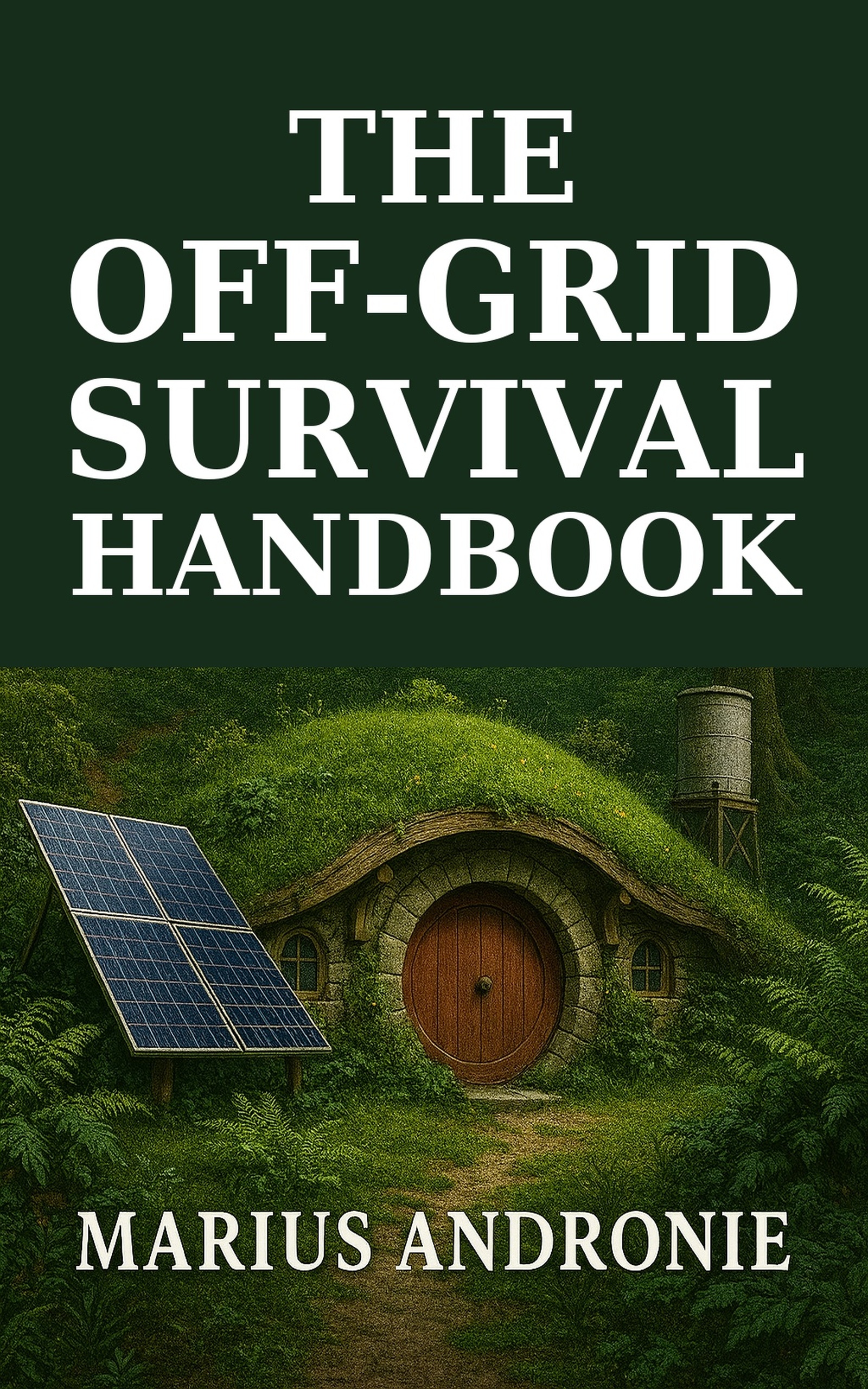
The complete system
The Off-Grid Survival Handbook
An off-grid survival book for ordinary families: water, food, energy, shelter, security and first aid in fifteen short chapters, with energy priorities for a crisis, three sample power setups and a 30-day starter plan.
See the handbookFrequently asked questions
What should I have ready for a power outage?
A flashlight for every person, spare batteries, a way to charge phones, a battery radio, water and non-perishable food for several days, a plan for medicine or medical devices, and working carbon monoxide detectors.
How long will food last in the fridge without power?
Ready.gov says a closed refrigerator keeps food cold for about four hours, and a full closed freezer for about 48 hours. Throw out food that reaches 40°F (about 4°C) or higher.
Is it safe to run a generator in the garage?
No. Ready.gov says to use generators only outdoors, at least 20 feet from windows, doors and attached garages, because of the risk of carbon monoxide poisoning.
What should I do first when the power goes out?
Check whether it is just your home and report it, use one flashlight to save batteries, keep the fridge and freezer closed, unplug sensitive electronics, and check on vulnerable neighbors.
How much water should I store for a power outage?
Ready.gov's guidance is at least one gallon per person per day for several days. The emergency water calculator on this site works out the total for your household.
Related reading: the emergency water calculator, off-grid survival for beginners, or bug in or bug out, or more on the blog.